
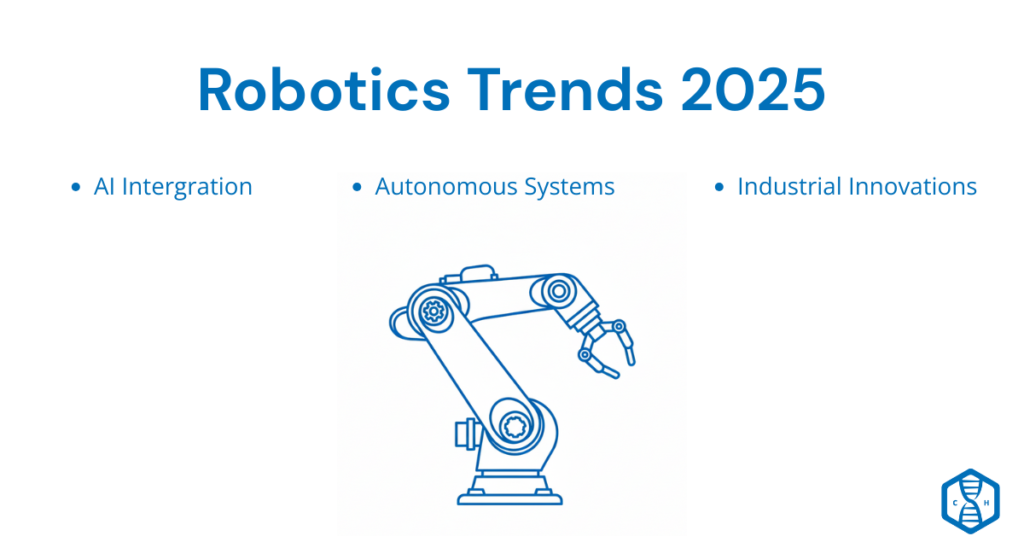
The 10 biggest robotics trends in 2025 are AI and deep learning, humanoid robots, industrial robots, service robots, medical robots, collaborative robots, autonomous driving, swarm robotics, augmented reality, and soft robotics. Robots are painting portraits, performing surgeries, and working alongside humans on factory floors. This isn’t science fiction anymore. It’s 2025, and robotics has finally arrived.
Right now, 4.28 million robots work in factories around the world. That’s 10% more than in 2022. The global robotics market hit £73.6 billion and keeps growing at 20% each year. Understanding robotics isn’t optional anymore; it’s essential.
This guide covers 10 big robotics trends in 2025. You’ll learn how AI makes robots smarter, what humanoid robots can do now, and how this tech is changing healthcare, factories, and transport.
Reading time: 10 minutes
What is Robotics?
Robotics brings together mechanical engineering, electrical systems, and artificial intelligence. These parts work together to create machines that can operate on their own. Today’s robots use advanced AI, machine learning, and sensor tech to understand their world.
The difference between 2025 robots and older models is dramatic. Old robots needed detailed programming for every single task. They worked in cages, isolated from humans. Now, AI-powered systems learn from experience, adapt to changes, and work safely alongside human workers on the same factory floor.
Three big shifts define modern robotics:
- Physical AI – Robots train in virtual spaces before working in the real world. This cuts development time and safety risks.
- Team design – Robots now work safely next to humans without barriers. No more cages or safety zones needed.
- Green focus – Robots help cut waste through precise manufacturing. They use less material and energy than human-run processes.
1. AI and Deep Learning: The Intelligence Behind the Machines
Artificial intelligence is one of the biggest trends changing robotics in 2025. Physical AI lets robots train in virtual spaces before they work in the real world. This cuts development time and safety risks while boosting performance.
AI in Logistics
AI in logistics has turned chaotic supply chains into precise networks. Smart algorithms predict demand, find the best routes, and manage robot teams. The result? Packages arrive faster and cost less than ever before.
Boston Dynamics’ Stretch Robot
The Stretch robot delivers top reliability for warehouse work. It runs non-stop to keep goods flowing smoothly. It can process hundreds of cases per hour – four times faster than human workers – while staying accurate.
2. Humanoid Robots: When Science Fiction Meets Reality
Humanoid robots are finally leaving science fiction labs and entering factory floors. Companies are proving that machines built like humans aren’t just novelties. They’re the next big workforce, able to move through human-designed spaces with ease.
Robots in Art
AI-Da’s Royal Portrait Reshapes Artistic Expression
The humanoid artist AI-Da just revealed her latest work – an oil portrait of King Charles III titled “Algorithm King.” This piece honors the monarch’s commitment to protecting the environment and promoting interfaith understanding.
Creator Aiden Miller built AI-Da in 2019 with help from AI researchers at Oxford and Birmingham universities. AI-Da creates thought-provoking original art designed to spark meaningful conversations and push creative boundaries – not to replace human artists.
Robots in Sports
Beijing’s Robot Football Revolution Kicks Off the Future of Sports
In Beijing’s Yizhuang district, four teams of Booster humanoid robots just played in China’s first autonomous football match. No human operators controlled them.
These robots tracked teammate positions, read field markings, and made quick tactical choices about passing and shooting – all in real time based on game situations. The performance impressed industry watchers and raised questions about where this tech is heading.
Booster Robotics founder Cheng Zhao sees potential for future human-robot hybrid matches, though he stresses safety remains the top priority. What once seemed like pure science fiction is becoming reality faster than expected.
3. Industrial Robots: The Manufacturing Revolution
Industrial robots are the backbone of modern factories. These machines handle welding, assembly, and quality checks with perfect accuracy every single time.
Smart Manufacturing in Action
Today’s factories connect robots, sensors, and AI into one smart network. When a supplier runs low on parts, the system knows. Demand spikes? Robots adjust production speeds automatically. Machines flag themselves for maintenance before they break down
This is smart manufacturing – factories that think and adapt on their own. The car industry leads the way. It uses 32% of all industrial robots worldwide and pioneered this connected approach.
Amazon Deploys One Million Robots
Amazon just placed its one millionth robot in a fulfillment center in Japan. That’s a huge milestone.
All these robots run on Amazon’s AI system called DeepFleet. It tells robots where to go and what to do across the entire network. This cut robot travel time by 10%. The result? Packages arrive faster and cost less to ship.
4. Service Robots: Beyond the Factory Floor
Service robots have become the ultimate problem-solvers across many industries. They work in hospitals, hotels, and homes. These robots handle everything from patient care to customer help.
MIT’s Revolutionary Eldercare Robot
The American population aged 65 and above will surge from 58 million to 82 million by 2050. To fight this growing eldercare crisis, MIT engineers created the Elderly Bodily Assistance Robot (E-BAR).
This mobile companion gives crucial physical support to elderly people. It helps them stay stable as they move through their homes. The system fights falls – the top injury threat facing adults over 65. This could change how we approach aging at home.
5. Medical Robots: Precision Healthcare’s Promise
Medical robots are changing healthcare. They bring superhuman precision to operating rooms and patient care. These robots improve surgical results, speed up recovery times, and help an aging global population.
Johns Hopkins Achieves Autonomous Surgery Breakthrough
Researchers at Johns Hopkins University did something that seemed impossible just years ago. An AI-powered robot removed gallbladders entirely on its own with a perfect success rate.
During tests on realistic human models, the robot completed 17 tasks across 8 surgeries with 100% accuracy. It wasn’t just copying movements – it truly understood and performed complete procedures on its own.
This shows that with more training, these systems could handle many types of surgery on real patients with minimal human help. Operating rooms could look very different soon.
6. Collaborative Robots: The Partnership Evolution
Collaborative robots (cobots) have broken the old barriers between humans and machines. These robots work safely next to human workers without cages or barriers. This makes automation affordable for businesses of all sizes.
Cobots in Retail and Hospitality
Cobots provide reliable service that never calls in sick. Robots like Pepper by SoftBank greet customers, manage inventory, and handle restaurant deliveries. They do the repetitive tasks that frustrate human workers while staying charming and efficient.
7. Autonomous Driving: The Robotaxi Era
Self-driving cars have filled headlines for years. Now in 2025, they’re finally here. Companies like Tesla and Waymo lead the way with cars that navigate city streets on their own. These cars could cut traffic deaths, reduce pollution, and help people with disabilities get around.
Tesla’s Robotaxi
Tesla’s Model Y robotaxi shows a bold plan. Turn regular Tesla cars into self-driving taxis through software updates.
Unlike custom-built robotaxis, Tesla uses its existing car factories. This could let every Tesla owner run their own taxi fleet.
8. Swarm Robotics: Collective Intelligence in Action
Swarm robotics shows what happens when multiple robots work together. These robot teams can tackle complex tasks that go beyond what one robot can handle alone.
HUGO Robot Transforms Precision Agriculture
HUGO Green Solution built HUGO, a farming robot that handles crop monitoring, plant protection, and sowing with automated precision. This smart farming companion does soil tests, delivers detailed insights, and gives farmers custom tips to boost plant growth – even in tough conditions.
9. Augmented Reality: The Digital-Physical Bridge
AR tech spans gaming, education, training, navigation, and industrial uses. It bridges virtual and physical worlds to boost productivity. As AR devices like smart glasses become cheaper and better, more industries adopt them.
Remote Work Through Robot Avatars
AR robots open new possibilities for people with serious illnesses who can’t leave home or work regular jobs. VR-controlled robots can change this. Tokyo’s DAWN Robot Cafe shows how.
At DAWN Robot Cafe, all waiters are robots controlled remotely by people who can’t leave home. These “pilots” use their robot avatars to greet customers, take orders, and deliver food. The controls adapt to each person’s abilities. Some operators control robots entirely through eye movements.
As VR tech improves, cafes like DAWN could add immersive AR for even better work experiences. This shows that physical limits don’t have to stop meaningful work when humans and robots team up.
10. Soft Robotics: The Future of Delicate Tasks
Soft robotics builds robots using flexible materials that mirror living organisms. This is one of the industry’s fastest-growing trends. These robots work with human-like skill, making them perfect for delicate tasks in healthcare and manufacturing.
MIT Robot Gains “Bodily Self-Awareness” Without Sensors
At MIT’s CSAIL lab, a soft robotic hand grasps objects without any built-in sensors. The breakthrough? A single camera watches the robot and uses visual feedback to control its actions.
CSAIL scientists built this system without traditional sensors or hand-designed models. Instead, robots learn their physical responses through vision alone. The approach, called Neural Jacobian Fields (NJF), gives robots a form of bodily self-awareness. They understand how their bodies move simply by watching themselves.
Conclusion: The Road Ahead
The robotics revolution of 2025 isn’t just about tech progress. It’s about completely reimagining how humans and machines work together to solve complex problems. From humanoid robots playing football and creating art to self-driving cars navigating city streets, we’re seeing decades-old promises become real.
The question isn’t whether robotics will reshape your industry – it’s when. The companies and professionals who understand these trends today will lead tomorrow. The future of work, healthcare, manufacturing, and daily life is being built right now – with robots at the center.
Frequently Asked Questions
Will robots replace human jobs in 2025?
Not exactly. Robots will take over repetitive tasks. But they will also create new jobs in maintenance, programming, and management. The key? Learn to work with robots, not against them.
How much does it cost to implement robotics in a business?
It depends. Small collaborative robots start around $25,000. Large Industrial robots cost $50,000 and up. Don’t have that much? Monthly subscription models let you pay as you go with no high upfront cost.
Are robots safe to work alongside humans?
Yes. Modern robots have sensors that detect people nearby. They slow down or stop automatically. No cages needed. Just proper training for your team.
What industries benefit most from robotics adoption?
Cars, electronics, and factories lead the pack. But logistics, healthcare, retail, and even farms now use robots too. If you have repetitive tasks, robots can probably help.
What skills do workers need to work with robots?
Basic tech skills and problem-solving. Most robots today use simple controls – no coding required. Training takes weeks to a few months, not years.
How long does it take to deploy robotic systems?
Small robots? One to three months. Big complex systems? Six months to a year. Subscription models can get you started in weeks.
Can small businesses afford robotics technology?
Yes. Robots often cost less than hiring full-time workers. Plus, subscription plans spread the cost over time. Many businesses see their money back within two years
Keep Learning About Robotics & Technology
Continue reading these guides:
The Future is Now: 10 Scientific Trends Reshaping Our World in 2025
Beyond Earth: 10 Space Technologies Defining Our Future in 2025
2025’s Breakthrough AI Trends: The 5 Innovations You Can’t Ignore
Exploring Agentic AI: Capabilities, Applications, and Future Trends
Need Help with Your SEO Strategy?
Whether you’re optimizing content, doing technical audits, or building SEO strategies, I can help. I create SEO content that drives real traffic and conversions for biotech companies, research institutions, and science organizations.
View My Services | Get in Touch

Curtis Haavi
SEO/AEO Specialist | Science & Technology
Curtis creates SEO content for AI, biotech, and tech companies. He combines molecular biology expertise with clear writing to produce content that ranks and engages.